



Why we’re ditching hot air for IR in bio-sensor fab
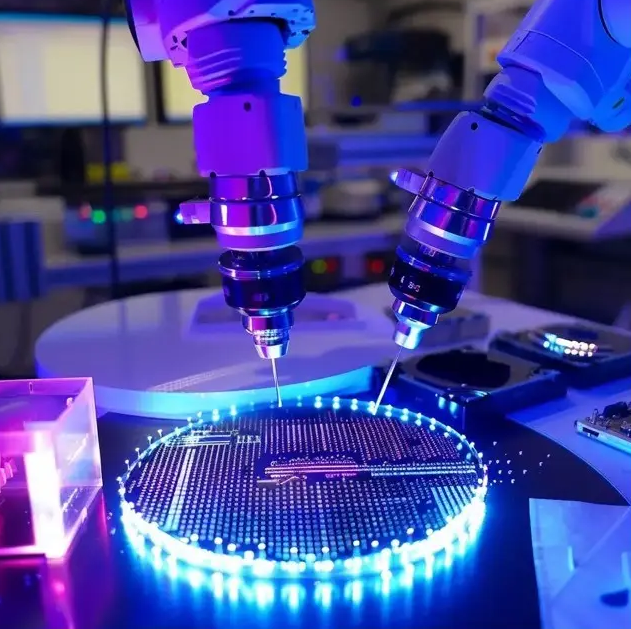
If you’ve spent any time in a semiconductor line, you know the drill. You’re curing thin films or drying out a substrate, and you’re stuck waiting on those old-school hot air setups. The problem is that hot air is just… slow. It has to heat up the air first, and then the air has to heat the part. It’s a middleman that nobody needs, and it adds a frustrating amount of dead time to every single batch. The shortcut: Infrared Here’s the thing about IR lamps: they just skip the air entirely. Instead of waiting for a breeze to warm things up, IR uses electromagnetic radiation to hit the material directly. In bio-sensor work, we’re targeting specific absorption bands. The IR hits the substrate and it turns into heat almost instantly. Compare that to forced convection. Those ovens take up a massive amount of floor space and take forever to ramp up. With IR, you’re talking about cutting your heating cycle from minutes down to seconds. When you’re trying to push more product through the line, that speed is everything. Making it work in the real world You can’t just throw any bulb in there. To get this right, you’ll want short-wave or medium-wave emitters. They give you the punch you need to cure those bio-active layers without accidentally frying the base wafer. The best part? You can usually just swap out your air nozzles for these lamps. It’s a pretty straightforward trade. But you do have to be careful with your power density. If you go too heavy on the wattage for a small area, you’ll scorch the organic layers of the sensor. You’ll need a fast PID loop and some solid distance sensors to make sure the heat stays steady. What this actually means for your floor It’s not just about the clock. It’s about the space. You get to rip out a bulky oven and replace it with a compact array of lamps. That frees up a ton of room in the cleanroom. Plus, since you aren’t blowing air all over a sterile wafer, you’ve got a much lower risk of contamination. And the energy bill? It drops. Why heat the entire room when you only need to heat the part?