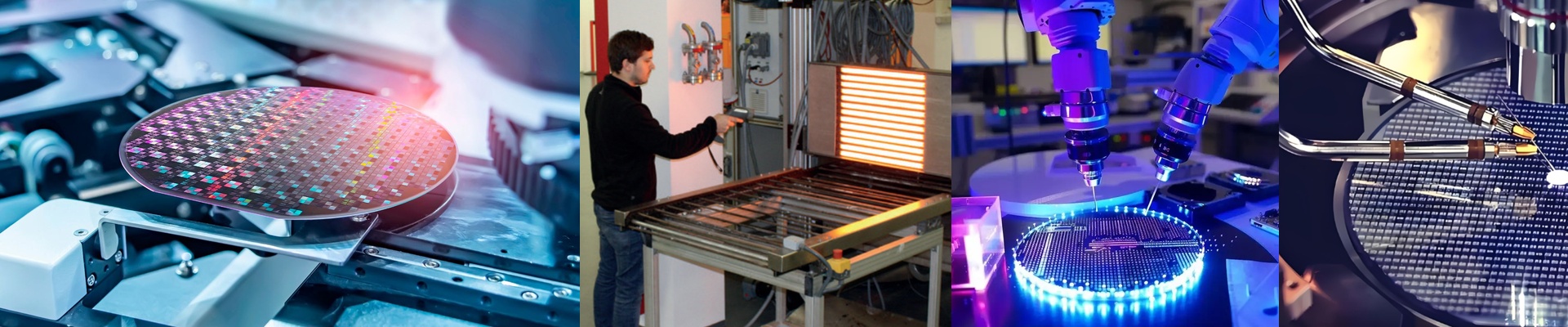
If you’re running a Class 100 cleanroom, you already know that air filters are only half the battle. The real headache? Your heat sources. Most standard IR lamps are a nightmare for contamination. Between the adhesives and those metal end-caps, they tend to shed particulates or “outgas” right when you need things to be pristine. We figured out a better way: high-purity quartz tubes and specialized ceramic end caps. Why this actually matters Here is the thing about most emitters: they use metal crimps to hold the filament. When you cycle the heat up and down, that metal can oxidize or literally flake off. Not great when you’re working with wafers or optics. We swapped the metal for high-grade ceramic. Ceramic doesn’t react with the air, and it doesn’t off-gas. It just sits there and does its job, keeping your heating zone chemically inert so you don’t find microscopic debris ruining your yield. The nerdy stuff (made simple) For the envelope, we use fused silica. It’s a high-purity quartz that can take a massive thermal shock without cracking. But the real trick is the match. We paired the ceramic caps with quartz that has the exact same coefficient of thermal expansion. If those two materials don’t expand and contract at the same rate, the seal will pop during the first few ramp-ups. Plus, we spec these for high-intensity shortwave output. You hit your target temps faster, which means your substrate spends less time exposed to whatever is floating in the air. A few things to watch out for It’s not a magic bullet—there are a couple of trade-offs. First, the ceramic caps make the emitter a bit longer than the metal ones. Double-check your fixture footprint before you try to swap them in, or they might not fit. Second, high-purity quartz is rigid. It’s tough, but it doesn’t like being squeezed. If your mounting clips are too tight, you’re looking at a stress fracture. Be gentle with the installation. And one last tip: make sure your cooling system is up to the task. The heat density is concentrated, and you don’t want to overheat the bond where the ceramic meets the quartz.