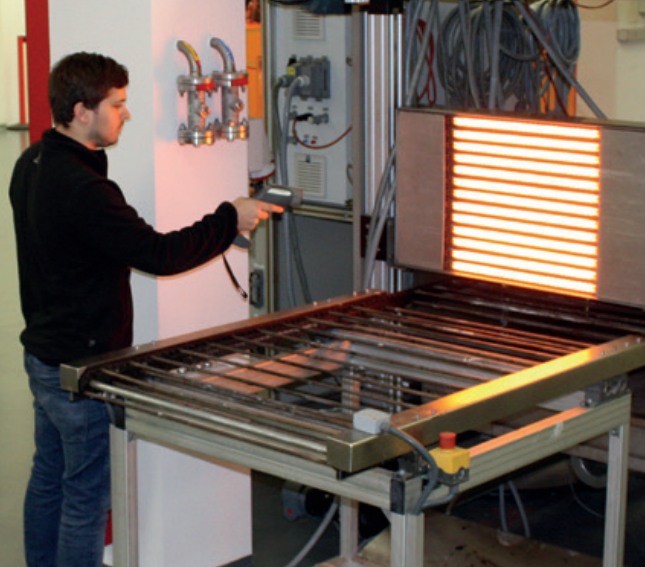
On the lithography floor, a 1°C swing across the wafer can shift linewidth by nanometers, and a particle spike can kill a whole lot of product. That’s why the zoned infrared heating module was built to keep thermal behavior inside the process window, where it belongs. What matters, technically Short-wave infrared emitters are arranged in independently controlled zones, so you can shape the temperature to match the wafer map. Across the full process surface, wafer-level uniformity stays within ±0.1°C. Photoresist bake becomes repeatable: soft bake and hard bake run with tighter thermal budgets, and CD loss from thermal drift drops. The hardware is cleanroom-compatible from Class 1–100 and is built to keep particle events at zero. Reliability is measured, not promised: 24/7 operation with zero unplanned downtime, and emitter life is tracked so PM windows stay predictable. Why it works where it matters You coat photoresist, then you bake. If the bake is uneven, you get edge bead, poor adhesion, and etch bias after pattern transfer. With zoned control, you can match edge energy to center energy instead of over-baking just to cover the map. The payoff is consistent critical dimension control across the wafer, fewer rework lots, and stable yield. The module also cuts energy waste by delivering heat only where it’s needed, and because it recovers quickly between lots, cycle time compresses without sacrificing bake quality. What you need to know up front Installation means matching the host platform’s mechanical and electrical envelope—connector type, exhaust routing, the whole layout. Expect a commissioning step to map the zones to your specific wafer stack and photoresist recipe. The module is cleanroom-ready, sure, but it still needs cleanroom-grade utilities and a disciplined preventive maintenance plan to keep particle counts low and performance steady over time.