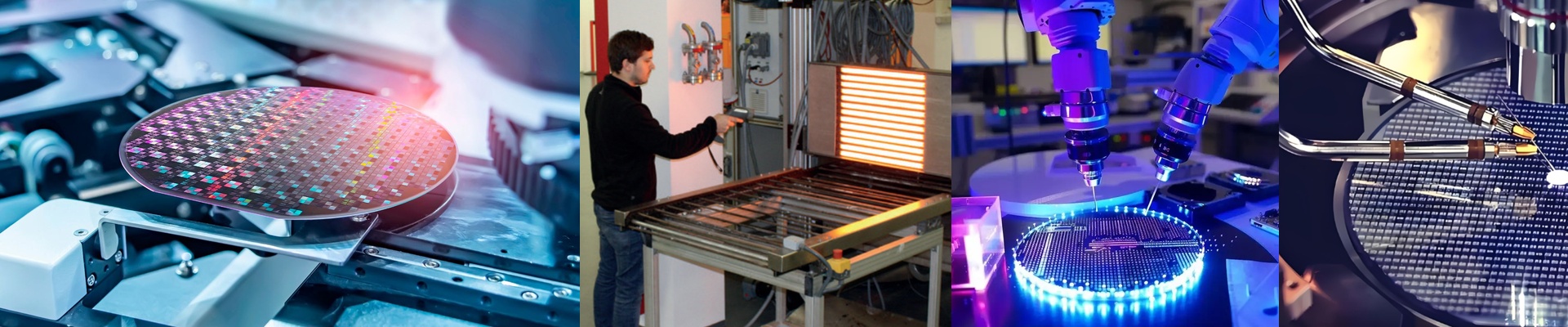
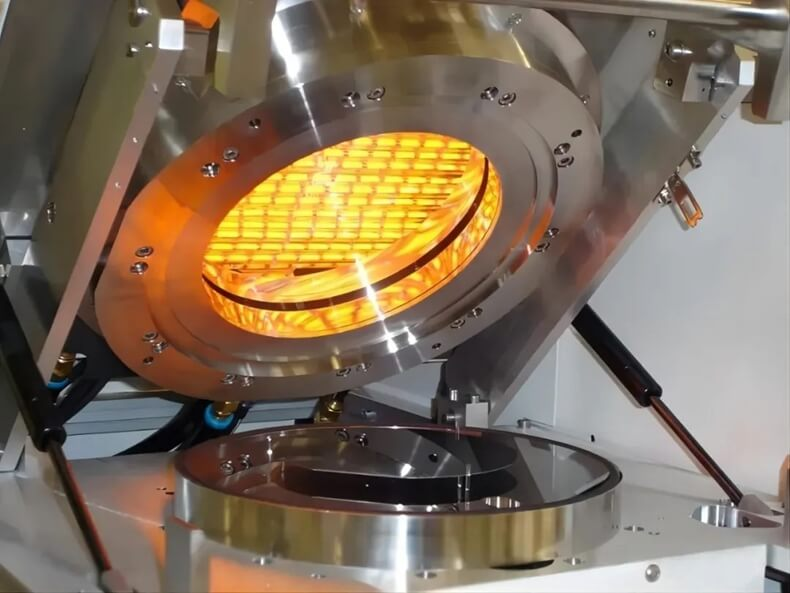
On the fab floor, a hot plate that drifts even 0.2°C can quietly wreck photoresist profile control, then take your overlay and etch margins with it. Wafers don’t forgive thermal instability. So we built our infrared replacement heaters to match reality: no drift, repeatable bakes, and a cleanroom-ready build. What matters, technically We run short-wave infrared elements that couple heat straight into the plate, fast. Across the active zone, wafer-level uniformity lands at ±0.1°C. Cycle-to-cycle, temperature repeatability holds within ±0.5°C, so soft bake and hard bake profiles stay locked to the recipe. The heater body is quartz and high-grade ceramic—no exposed organics—and the design keeps particle generation low enough for Class 1–100 spaces. The control behavior is clean and stable, with low thermal inertia. That means it settles quickly after a cassette load, cutting idle time without giving up precision. Why this works in lithography In the lithography bay, photoresist sensitivity makes temperature the lever you lean on for CD control and defect performance. A stable hot plate translates to fewer rework lots, tighter distributions, and a predictable thermal budget shift to shift. The fast response shortens non-value heat-up, and the low-mass construction trims energy use on ramp and standby. You keep the same footprint and connectors, but you swap variability for control—yield protection you can see in less scrap and fewer excursions. What you need to know Retrofit is straightforward on standard hot plate platforms, but you have to verify alignment at the thermal interface and the sensor location. Even a mispositioning measured in millimeters can shift what you see for uniformity. Confirm voltage, amperage, and connector type before ordering. After installation, run a short burn-in and calibration to map plate-to-wafer offset and lock the setpoint to your process.