
Dealing with Lamp Blowouts in Wafer Drying
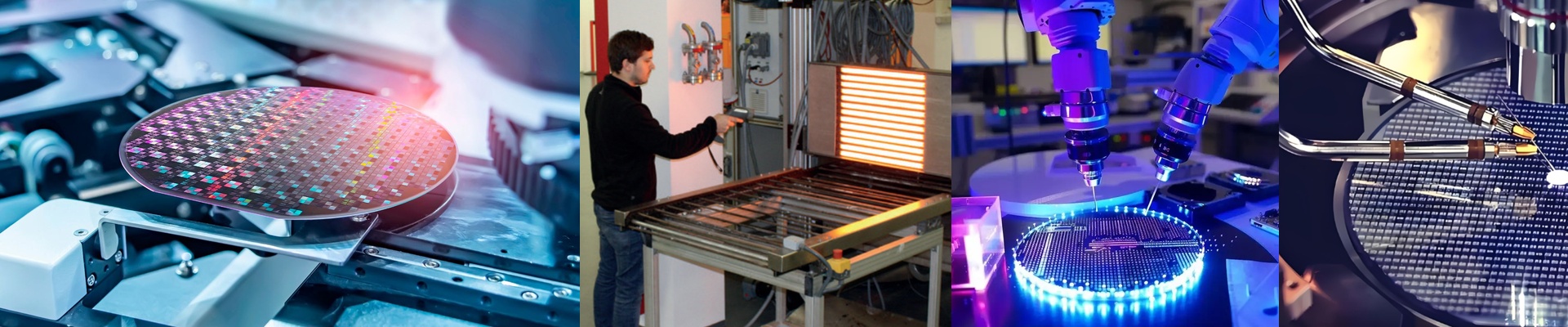
Let’s be honest: when an infrared lamp pops in a semiconductor fab, it’s a nightmare. It’s not just about swapping out a part. When a quartz tube bursts under a heavy load, it showers your wafers in shards and particulates. Just like that, your yield vanishes, and your team is stuck spending hours scrubbing the chamber clean. It’s a mess nobody wants to deal with. Why do these tubes actually burst? It usually comes down to thermal shock. When you’re pushing high wattage, you get these sharp temperature swings across the quartz. If the heat isn’t spread out evenly, the stress builds up in one spot until—snap—you’ve got a crack. To stop this, we stick with high-purity fused quartz. It has a low coefficient of thermal expansion, which is a fancy way of saying it can take a beating. You can cycle the power rapidly and the tube won’t freak out or fracture. Keeping the junk out Even with the best quartz, things happen. So, we use a two-step safety net to keep the wafers clean. First, we apply specialized coatings. These help stabilize the IR emission so you don’t get those nasty localized hot spots. Then, we wrap the whole assembly in a shatter-proof containment sleeve. Think of it as a safety shield. If the inner tube fails, the sleeve catches all the debris. The particles stay trapped, and your wafer path stays clear. The little things that cause big problems Installation is where a lot of people trip up. If your connectors aren’t a precision fit, you get loose contacts. That leads to arcing, which creates tiny heat spikes that weaken the quartz over time. And keep an eye on your power supply. If you’ve got voltage spikes hitting the system, it doesn’t matter how high-quality your lamp is—it’s going to die early. One last thing: fast drying needs high-density heat, but that heat has to go somewhere. If your airflow can’t keep up with the buildup around the housing, the lamp’s lifespan plummets. **Pro tip:**Just keep a close eye on the housing temperature. It’s the easiest way to spot a failure before it actually happens.