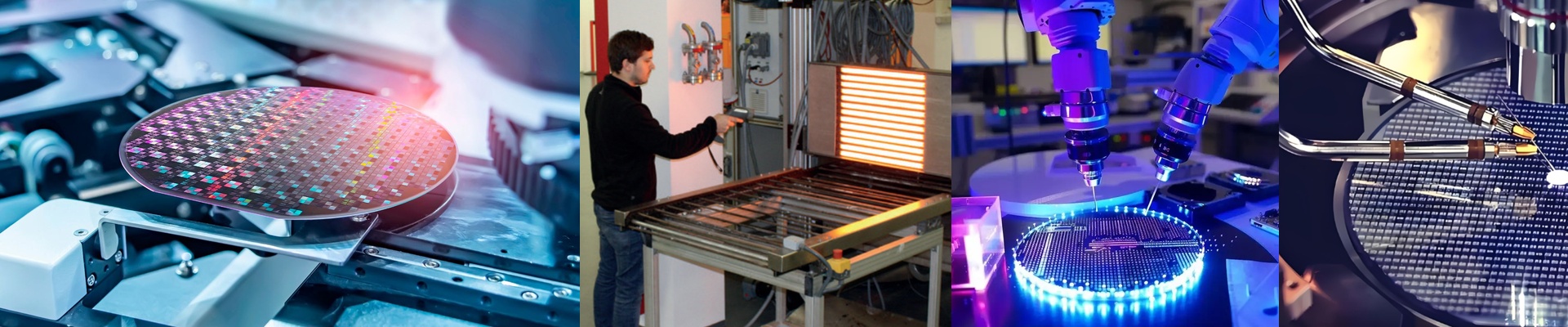
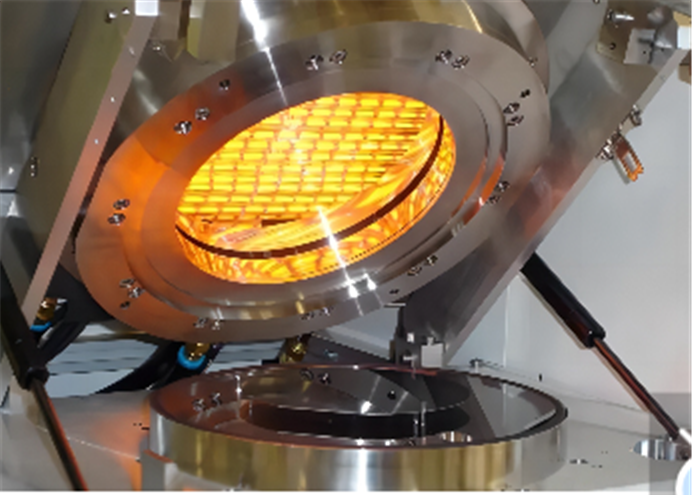
On the fab floor, laser dicing is all about thermal discipline. If you don’t have it, micro-cracks start running, kerf taper blows out, and post-dicing defects kill wafers that sailed through lithography and etch. The fix isn’t a band-aid—it’s a support heater built for the dicing step, right where you need it. What actually matters under the hood We built the unit around short-wave infrared (NIR) emitters and a quartz-enhanced thermal stack, so you get ±0.1°C uniformity across the wafer. That stability directly manages the photoresist thermal budget through soft bake and hard bake, keeping critical dimension control and line-edge roughness where they need to be. It’s Class 1–100 cleanroom compatible, and we’ve verified zero particle generation below 0.1 μm. Power delivery is calibrated for 24/7 ops, and repeatability holds within 0.2°C across lots, shifts, and tool changes. Why it plays in laser dicing Dicing is a thermal shock. The support heater pre-conditions the wafer, cutting down the thermal gradients that drive chipping and delamination along the dicing street. You end up with higher die yield, fewer reworks, and throughput that doesn’t yo-yo. Power is tuned to the thermal mass of the carrier and film, so you’re not wasting kilowatts while the setpoint stays solid. The payoff is predictable kerf geometry, consistent edge quality, and process windows that hold all the way from lithography through packaging. Here are the field notes Installation means matching the chuck interface and confirming NIR compatibility with the existing laser optics and safety interlocks. After preventive maintenance, run a short thermal soak calibration to re-establish uniformity. The heater performs within spec in vacuum or atmospheric conditions, but thermal response shifts with carrier type—when you swap films or frames, plan on a one-time recipe tune.